
Exclusive Tenant Representation for Commercial Property Searches
A commercial property search is not automatically tenant-led. With exclusive tenant representation, an adviser acts solely for the tenant throughout the leasing process. A commercial agent may represent tenants and landlords, so it is important to understand whose interests guide the search and nego...



A commercial property search is not automatically tenant-led. With exclusive tenant representation, an adviser acts solely for the tenant throughout the leasing process. A commercial agent may represent tenants and landlords, so it is important to understand whose interests guide the search and negotiations.
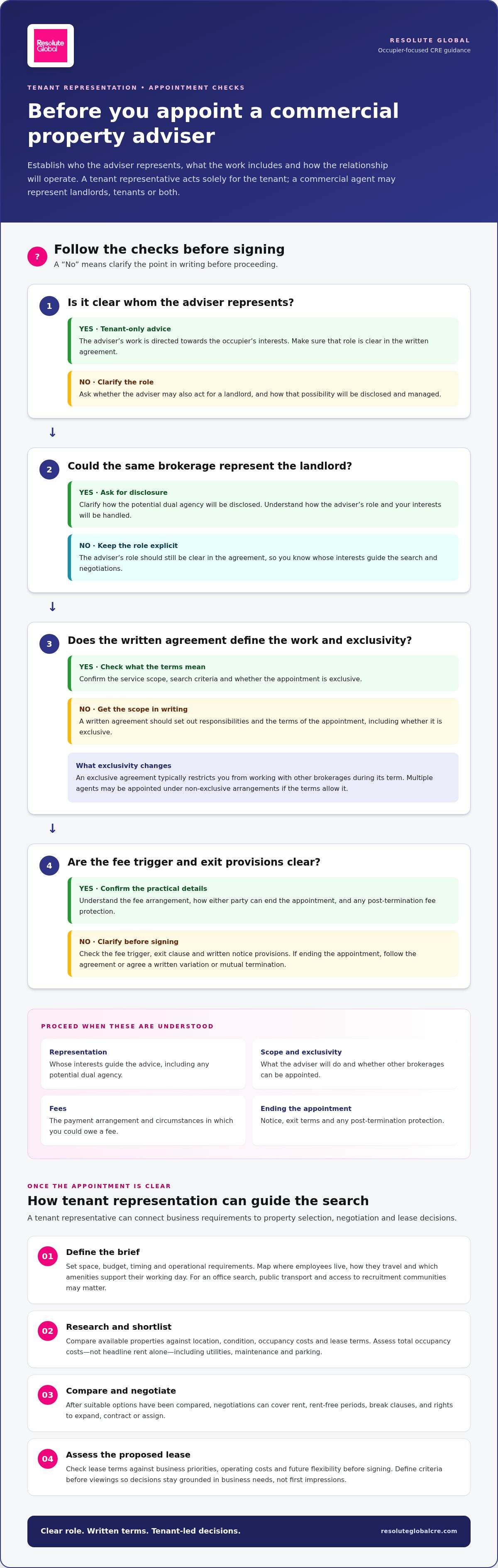
Before appointing an adviser, clarify whom they represent, what the work includes and how the relationship will operate. A written agreement should define the appointment’s scope and terms, including whether it is exclusive, so both parties understand their responsibilities.
This guide explains what tenant representation can cover, how it differs from commercial agency and what to look for in an agreement. It also outlines how occupier-focused guidance can support your property search, negotiations and decisions about a lease.
Key Takeaways
• A tenant representative can guide the search from market research through lease completion, aligning property options with your location, operational and occupancy-cost priorities.
• Put the appointment in writing and clarify its scope, exclusivity, duration, fee arrangements and how either party can end the relationship.
• Establish who the adviser represents: a tenant-only advocate differs from a commercial agent who may act for landlords as well as tenants.
• Resolute Global’s Occupier-focused CRE Guidance, Global Real Estate Advisory Network and Conflict-free Real Estate Solutions can help occupiers approach a property search with a clear, tenant-led perspective.
Commercial property search and transactions
A tenant representative can support the leasing process from market analysis and property selection through to negotiating lease terms.
Market Research and Property Selection
Market research compares available properties with your space, budget, timing and operational requirements. A representative can assess location, condition, occupancy costs and lease terms, then shortlist premises against those criteria. Compare total occupancy costs, including utilities, maintenance and parking, rather than looking at headline rent alone. This helps you judge whether a property fits your business financially and operationally.
Location Planning and Property Search
Map where employees live, how they travel and which amenities support their working day. For an office search, proximity to public transport may matter alongside access to the communities you recruit from. A law firm, for example, may prioritise a client-facing setting and confidential meeting space. Define these criteria before viewings begin so you can compare properties against business needs, not just first impressions.
Tenant-Only Advice and Conflicts of Interest
Tenant-only advice focuses on the occupier’s interests, rather than balancing a landlord’s instructions with the tenant’s requirements. Before signing, review the agreement’s scope, exclusivity period, fee trigger, exit clause and any post-termination protection. Clarify how potential dual agency will be disclosed if the landlord is represented within the same brokerage. If you want to end the appointment, follow the agreement’s written notice and exit provisions; where needed, agree a written variation or mutual termination.
Finding and Negotiating Commercial Premises
The representative defines your requirements, researches the market, shortlists premises and arranges viewings. Once you have compared suitable options, they can negotiate rent, rent-free periods, break clauses and rights to expand, contract or assign. Before signing, assess the proposed lease terms against your priorities, including operating costs and future flexibility. This process connects the initial search to the final transaction, keeping decisions grounded in your business needs.
Benefits of a written representation agreement
A written agreement turns the appointment into a clear working brief. It sets out the representative’s responsibilities, how the client’s interests will guide the work and where exclusivity applies. For commercial property decisions, clarity from the outset helps prevent conflicting instructions during the search and negotiations.
Can a tenant appoint multiple commercial property agents in the UK? Yes, if the arrangements are non-exclusive and their terms allow it. An exclusive agreement typically restricts the tenant from working with other brokerages during its term, so review the wording before appointing another agent.
What does an exclusive tenant representation agreement include? It should define the service scope, property or search criteria, start and end dates, exclusivity, fee arrangements, termination process and any post-termination fee protection. It can also explain how conflicts will be disclosed if the landlord is represented by the same brokerage. Read each clause before signing, especially if the agreement covers more than one location or development.
How long does an exclusive tenant representation agreement last in the UK? Commercial agreements commonly run for 3 to 12 months, but the written end date and any extension terms control the appointment. Confirm how notice must be given and whether the agreement ends automatically on that date.
Use the document to set practical expectations: who approves viewings, how opportunities are reported, and which lease terms matter most to occupancy planning. A focused scope can keep advice aligned as requirements evolve. For occupier-led advice that prioritises transparency, explore conflict-free property guidance.
How tenant representatives differ from commercial agents
The main difference is whom the adviser represents. A tenant representative is appointed to advance the occupier’s interests, while a commercial agent may act for landlords, tenants or both. That distinction can affect which properties are presented, what information is shared and how lease terms are approached.
Tenant-only advice can help align property decisions with business operations, from finding suitable premises to assessing flexibility for future change. A landlord’s agent, by contrast, markets a property on the owner’s behalf. If an agent or brokerage may represent both sides, clarify how that potential conflict will be disclosed and managed. The adviser’s role should be clear in writing.
What fees and commission do UK tenant representation agents charge? In commercial property, the landlord typically pays commission for both the listing representative and the tenant or buyer representative. The agreement should still explain the payment arrangement and any circumstances in which the tenant could owe a fee.
How do tenant representation agreements differ across England, Scotland, Wales and Northern Ireland? The wording of the agreement and the transaction’s applicable jurisdiction matter, so do not assume one document covers every UK search. Check the agreement’s scope, governing law, fee terms, exclusivity and exit provisions against the property location and appointment.
Before signing, compare the adviser’s stated role with the actual agreement, including any dual-agency disclosure and fee trigger. A conflict-free approach makes accountability easier to understand; the decisive point is whether the advice is clearly directed towards your interests. For occupier-focused advisory support, discuss your commercial property requirements.
Resolute Global: Occupier-focused CRE Guidance
Resolute Global supports occupiers with Occupier-focused CRE Guidance for decisions such as defining premises requirements, assessing lease options and aligning a property search with operational priorities.
Its Global Real Estate Advisory Network connects occupiers with real estate insight across markets, while Conflict-free Real Estate Solutions keep the focus on the occupier’s interests. The approach is built around clear priorities and considered advice, not competing landlord instructions.
If you’re planning a search or reviewing a commercial property decision, visit Resolute Global’s website to get in touch.
Make your next property decision occupier-led
A commercial property decision can shape how your organisation works, grows and adapts. Treat the search as a business-planning opportunity: define what your teams need from the space, then align the property strategy with your wider direction. The right advice should help you make the decision clearly and deliberately.
Resolute Global provides Occupier-focused CRE Guidance, a Global Real Estate Advisory Network and Conflict-free Real Estate Solutions. These services support occupiers seeking an independent perspective as they consider their next steps. Exclusive tenant representation can keep the occupier’s priorities central to the advisory relationship.
Start a focused conversation about your requirements and the decisions ahead. Contact Resolute Global about tenant representation, and take your next step with confidence.
Frequently Asked Questions
What is Tenant Representation Service?
Tenant representation is advisory support for an organisation seeking premises to lease or occupy. It translates business requirements into property criteria, helps assess options and supports decisions through the transaction. For example, a growing firm can compare a potential office move with staffing plans, workplace needs and internal approval priorities.
What is exclusive tenant representation in UK commercial property?
Exclusive tenant representation means appointing one representative to advise and act for the tenant within the agreement’s defined scope and term. The agreement may prevent you from appointing other brokerages for the search it covers. Before signing, clarify whether existing property leads, specific premises or separate future searches fall within that scope. This can prevent uncertainty if your requirements change.
What are the tenant agent's duties and conflicts of interest under UK rules?
Commercial brokers’ fiduciary duties include loyalty, confidentiality and full disclosure. Clarify how the representative will protect commercially sensitive information, such as your maximum rent or preferred lease terms. If the landlord is represented by the same broker or brokerage, the potential dual agency should be disclosed. Confirm how that arrangement may affect the advice you receive.
How does exclusive tenant representation compare with using a landlord's letting agent?
A landlord’s letting agent markets premises for the owner, while a tenant representative advises the occupier. You may still speak with the letting agent about a building’s features or viewing arrangements, but that agent is not there to assess your wider property strategy independently. A tenant-side adviser can help you evaluate the opportunity against your requirements and alternatives.
Proudly Untraditional
We’re proudly untraditional in the way we think, operate, and deliver value in the Corporate Real Estate sector.
Whether you’re a client seeking a new experience or an independent real estate adviser please get in touch to learn more.
More from the field
Keep reading for more sharp analysis on global corporate real estate


